
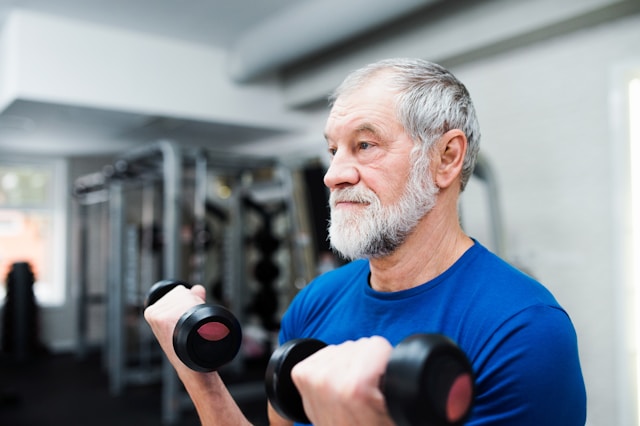
Exercise is often called one of the best medicines for healthy aging. Staying physically active can help older adults maintain strength, protect the heart, support brain health, and reduce the risk of many chronic diseases.
Regular movement is also linked to better mood, better sleep, and greater independence later in life.
But for many older adults, exercising regularly becomes increasingly difficult.
As people age, they often experience fatigue, muscle weakness, joint pain, obesity, poor balance, and lower motivation. Some also struggle with depression or low energy that makes physical activity feel exhausting before it even begins.
Because of this, many older adults stop exercising altogether, creating a cycle where reduced activity leads to even greater weakness and fatigue.
Now, researchers from UT Health San Antonio say a simple nutritional supplement may help break that cycle.
In a small but carefully designed study, scientists found that combining exercise with branched-chain amino acid supplements, commonly called BCAAs, appeared to reduce fatigue, improve mood, and slightly increase physical performance in older adults with obesity.
The study was published in the journal Diabetics.
The research involved 20 adults around 70 years old who were living with obesity.
Participants were randomly divided into two groups. One group received drinks containing BCAAs, while the other received placebo drinks without active ingredients.
At the same time, both groups followed the same eight-week exercise program. The exercise routine included light aerobic activities and strength training exercises designed for older adults.
Researchers wanted to understand whether adding BCAAs could improve how people felt both physically and mentally during exercise training.
BCAAs are special amino acids found naturally in protein-rich foods such as meat, eggs, dairy products, and some plant foods. The three main BCAAs are leucine, isoleucine, and valine.
The body uses amino acids to build and repair muscles, but researchers now believe BCAAs may also affect the brain, mood, energy levels, and inflammation.
The scientists focused especially on fatigue.
Fatigue is more complicated than simply feeling sleepy or physically tired. Some people experience what researchers call “central fatigue,” which involves the brain and nervous system.
In central fatigue, people may feel mentally drained, unmotivated, or emotionally exhausted even if their muscles are still physically capable of activity.
Study author Dr. Jason O’Connor explained that inflammation in the body may alter how amino acids are processed in the brain. These changes may contribute to feelings of exhaustion, low motivation, and depressed mood.
Researchers believed that increasing BCAA levels through supplements might help restore balance and improve both physical and mental energy.
After eight weeks, the results showed a striking difference between the two groups.
The group receiving placebo supplements showed little improvement in strength or endurance despite participating in the exercise program.
In fact, their fatigue levels increased by about 5%, and symptoms of depression also became worse during the study period.
The researchers found this surprising because exercise alone is usually expected to improve mood and energy.
The BCAA group, however, experienced much more positive results.
Participants taking the supplements showed about a 45% reduction in fatigue and a 29% reduction in symptoms of depression. They also experienced modest improvements in strength and physical endurance.
Researchers believe these findings may help explain why some older adults stop exercising even when they understand its health benefits.
If exercise does not quickly improve how people feel, they may become discouraged and lose motivation to continue.
The study suggests that combining exercise with nutritional support may help older adults experience more immediate benefits, making physical activity feel more rewarding and sustainable.
Scientists are also interested in how BCAAs may affect inflammation and the immune system.
Inflammation naturally increases with aging and obesity and has been linked to fatigue, depression, muscle loss, and chronic disease.
Researchers now suspect that BCAAs may help reduce harmful inflammation or improve how the brain responds to inflammatory signals.
Dr. O’Connor and his team plan to continue studying these effects in both humans and animal models.
The researchers are especially interested in helping older veterans, who often face multiple health challenges as they age.
The team is also studying how BCAA supplements affect aging mice, and early findings have reportedly been encouraging.
Although the study was small, scientists say the results are promising because they suggest a relatively simple intervention could help improve quality of life in older adults struggling with fatigue and low motivation.
Still, researchers caution that much larger studies will be needed before doctors can make broad recommendations.
Scientists will need to confirm whether the results hold true in larger and more diverse populations and determine the safest and most effective doses.
Experts also note that supplements are not a replacement for healthy eating, physical activity, medical care, or treatment for depression.
Even so, the findings highlight how nutrition, exercise, inflammation, and brain health may all work together during aging.
The study suggests that for some older adults, targeted nutritional support may help make exercise feel easier, more enjoyable, and more beneficial.
As researchers continue exploring ways to support healthy aging, the findings offer hope that small changes in diet and exercise programs may help older adults maintain energy, mobility, independence, and emotional well-being later in life.
If you care about nutrition, please read studies about the harm of vitamin D deficiency, and Mediterranean diet may preserve brain volume in older adults.
For more health information, please see recent studies about foods to naturally lower high blood pressure, and a simple breakfast switch can help control type 2 diabetes.
Copyright © 2026 Knowridge Science Report. All rights reserved.