For many young children, a visit to the doctor’s office can be stressful.
They may worry about getting a shot, having blood taken, or meeting unfamiliar medical staff.
Now, researchers are testing whether small, friendly robots can help make these visits less scary.
At the UC Davis MIND Institute in California, a group of adorable social robots called LOVOTS is helping scientists explore a new way to reduce children’s anxiety before medical appointments.
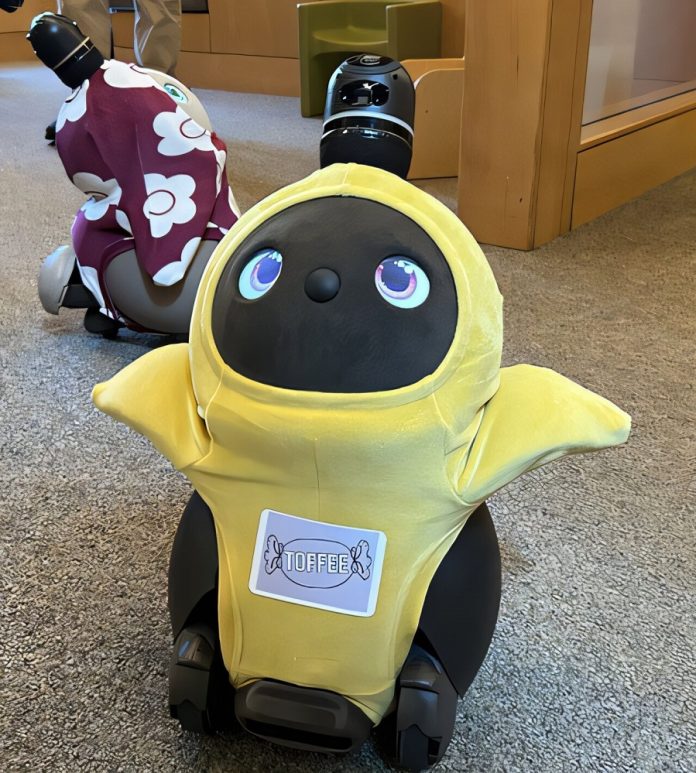
The name LOVOT combines the words “love” and “robot.” These child-sized robots are designed to encourage emotional connection rather than perform practical tasks.
They are covered in soft, colorful fabric, have large round eyes, make gentle chirping sounds, and often stretch out their little arms as if asking for a hug.
The robots are also equipped with touch sensors and cameras that allow them to respond to people around them.
When children cuddle, pet, or hold them, the robots react with different sounds, eye movements, and playful behaviors, making each interaction feel personal.
Researchers wanted to find out whether spending time with these robots while waiting for a medical appointment could help children feel calmer and less anxious.
This is the first study to examine the use of social robots in a children’s medical clinic.
Assistant Professor Veronica Ahumada, who leads the research, studies how technology can improve human connection and make health care more patient-friendly. She believes new technologies should be carefully tested before hospitals decide to use them.
Four LOVOTS—named Cocoa, Jellybean, Cereal, and Toffee—have been visiting the waiting room at the MIND Institute several times each week. Researchers have noticed that many children are naturally drawn to the robots. Some run over to greet them as soon as they arrive.
The robots were created in Japan and only understand Japanese commands. Staff members teach children simple words such as “oide,” meaning “come here,” so they can interact with the robots.
The LOVOTS also have charming behaviors that encourage children to care for them. If a child gently rubs a robot’s tummy, it slowly closes its eyes, makes soft purring sounds, and appears to fall asleep. Many children respond by comforting the robot, telling it that it is safe to rest or even singing lullabies like “Twinkle, Twinkle Little Star.”
One young participant, three-year-old Cameron, was worried about having a blood test before arriving at the clinic. Her mother said Cameron had been thinking about the blood draw during the drive to the appointment. However, after meeting one of the robots named Cereal, her attention quickly shifted from fear to play.
Instead of focusing on the upcoming procedure, Cameron spent her time singing, cuddling, and interacting with the robot. According to her mother, this cheerful distraction helped the blood test go much more smoothly than expected.
The study also protects patient privacy. Although the robots use cameras to recognize people and objects, they do not record any images or videos. Instead, researchers observe the interactions and take written notes.
The research team will continue collecting information before analyzing the results. They hope the study will show whether social robots can become a valuable tool for reducing children’s stress during medical visits.
If successful, these friendly AI companions could one day help make hospitals and clinics feel much less frightening for young patients while encouraging warmth, comfort, and human connection.