
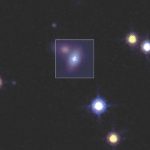
Rare discovery sheds light on the mysteries of the Universe
Scientists have found a supernova explosion called "SN Zwicky" using an extraordinary phenomenon known as gravitational lensing.

Astronomers discover Tatooine-like planetary system with double delight
Astronomers have made an exciting new discovery—a multiplanetary system that resembles the famous fictional world of Tatooine!
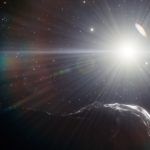
Scientists identify 20 potentially hazardous asteroids
Scientists identified around 20 asteroids that warrant further investigation to ensure they do not pose a threat to life on our planet over the next thousand years.
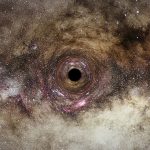
Why didn’t the big bang collapse in a giant black hole?
Despite the enormous densities, the early universe didn’t collapse into a black hole because, simply put, there was nothing to collapse into.
It’s relatively straightforward...
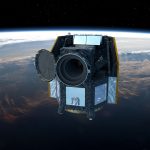
Scientists use CHEOPS telescope to detect four mini-Neptunes
An international team of European astronomers, using the CHEOPS space telescope, has successfully detected the presence of four new exoplanets.
These mini-Neptunes, which are smaller...
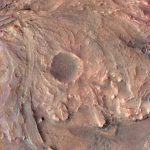
How and why NASA gives a name to every spot it studies on Mars
"The No. 1 reason we pick all these names is to help the team keep track of what they're finding each day," said Ashwin Vasavada.
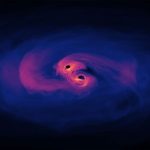
Pulsars help narrow the search for monster black holes
Scientists use a unique galaxy-sized detector composed of dead stars called pulsars to search for elusive pairs of supermassive black holes.
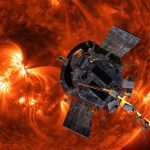
NASA’s Parker Solar Probe reveals sun’s hidden secrets
The Parker Solar Probe detected streams of high-energy particles that align with the supergranulation flows within coronal holes, revealing that these regions are the birthplace of the so-called "fast" solar wind.
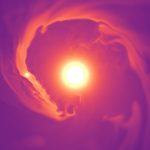
Astronomers detect enormous gas tails escaping a Jupiter-like planet
Astronomers have made an extraordinary discovery using the powerful Hobby-Eberly Telescope (HET) at The University of Texas at Austin's McDonald Observatory.
They have observed a...
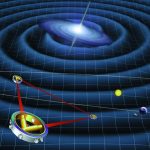
Scientists are unraveling the mysterious surroundings of black holes
New scientific tools are being built that will allow us to spy on black holes for much longer periods, even years before they merge.