Millions of people around the world have their blood pressure checked every year. The test is quick, painless, and is one of the most common health checks performed in doctors’ offices, pharmacies, and homes.
Blood pressure readings are important because high blood pressure usually causes no obvious symptoms. Many people feel completely well even when their blood pressure is high.
Over time, however, uncontrolled high blood pressure can damage blood vessels and greatly increase the risk of heart attacks, strokes, kidney disease, and other serious health problems.
Because blood pressure readings guide important treatment decisions, they need to be as accurate as possible. A new study from Johns Hopkins Medicine has found that something as simple as the position of your arm during a blood pressure test can significantly affect the results.
Even small changes in arm position can make blood pressure readings appear higher than they really are, potentially leading to a wrong diagnosis and unnecessary treatment.
The study was published in the journal Cerebral Circulation – Cognition and Behavior. The researchers wanted to understand how three common arm positions influence blood pressure readings. They looked at measurements taken when a person’s arm was resting on a desk, resting in their lap, and hanging down at their side.
The findings were surprising. When the arm was placed on the lap, the top blood pressure number, known as systolic pressure, was almost four points higher than when the arm was correctly supported on a desk.
When the arm hung by the side, the systolic reading was nearly seven points higher. Although a few points may not seem like a big difference, they can have important consequences.
According to guidelines from the American Heart Association, a systolic blood pressure reading of 130 or higher is considered stage 2 high blood pressure.
A difference of only a few points could mean that some people are incorrectly told they have high blood pressure when they actually do not. This may cause unnecessary worry, extra doctor visits, and even the use of medications that may not be needed.
The researchers studied 133 adults from different backgrounds. During one clinic visit, each participant had blood pressure measurements taken in all three arm positions.
Before each test, participants walked for two minutes to mimic what often happens in real life when people walk into a doctor’s office before having their blood pressure measured. They then sat down and had their blood pressure checked three times using a digital blood pressure monitor.
The results clearly showed that the most accurate readings were obtained when the arm was supported on a desk at about the same height as the heart. The other arm positions consistently produced higher readings. Both the top number, called systolic pressure, and the bottom number, called diastolic pressure, were often several points too high.
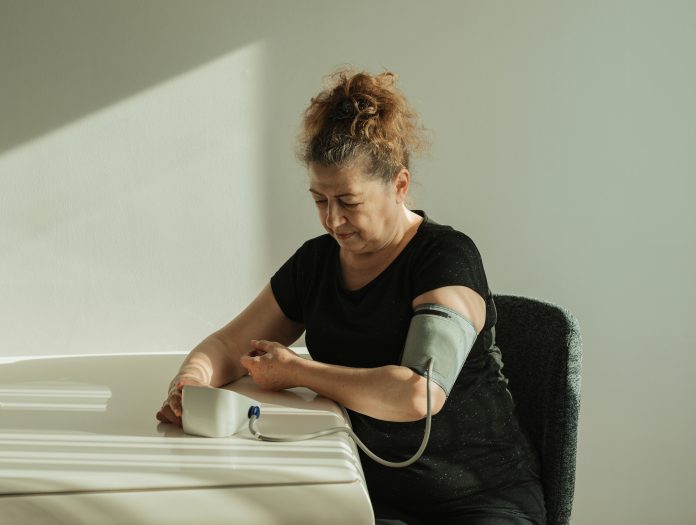
Doctors and researchers have long recommended specific steps for taking blood pressure correctly. A person should sit comfortably with their back supported and both feet flat on the floor. The arm being measured should rest on a table and be positioned at heart level.
However, these recommendations are not always followed in everyday medical practice. Many people sit on examination tables without proper support for their back or feet.
Others let their arm rest on their lap, allow it to hang by their side, or have someone hold it up during the measurement. This new study suggests that these small differences can produce misleading results.
The findings are also important for people who monitor their blood pressure at home. Home blood pressure monitors are widely used and can help people track their health over time. However, readings are only useful if they are taken correctly.
Simply making sure your back is supported, your feet are flat on the floor, and your arm is resting at heart level may improve the accuracy of your measurements.
This study serves as an important reminder that even simple medical tests can be affected by small details. Accurate blood pressure readings are essential because they influence decisions about treatment and long-term health.
By paying attention to proper arm positioning, both healthcare workers and patients can help ensure that blood pressure readings reflect a person’s true health status.
If you care about high blood pressure, please read studies about potatoes and high blood pressure, and top 10 choices for a blood pressure-friendly diet
For more information about high blood pressure, please see recent studies about impact of vitamins on high blood pressure you need to know, and the powerful link between high blood pressure and a potassium-rich diet.
Copyright © 2026 Knowridge Science Report. All rights reserved.