
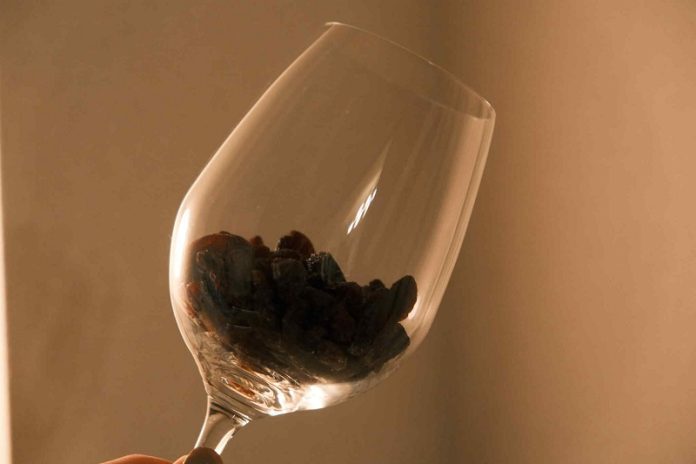
It may sound like a miracle, but new research suggests that people in ancient times could have made wine simply by soaking sun-dried raisins in water.
Long before modern wineries learned to isolate specific yeast strains, our ancestors relied on natural fermentation, often without fully understanding what made it work.
Now, scientists from Kyoto University have uncovered how raisins—rather than fresh grapes—may have played a much larger role in early winemaking than previously believed.
Modern wine production typically uses Saccharomyces cerevisiae, a yeast species known for reliably producing alcohol.
However, recent studies show that this yeast is rarely found on the skins of fresh grapes, raising questions about how ancient winemakers could have produced enough alcohol using only crushed grapes stored in jars.
Yet S. cerevisiae was found in large numbers on raisins, which led researchers to wonder whether dried grapes might have been the real secret to early fermentation.
To explore this idea, the Kyoto University team collected fresh grapes from an orchard and dried them for 28 days using three different methods.
Some grapes were sun-dried outdoors, others were dried in a laboratory incubator, and a third group was dried using a mix of sun and incubator conditions.
After the grapes turned into raisins, the scientists placed them into bottles with water and let them sit at room temperature for two weeks. Each type of raisin was tested in three separate bottles.
The results were striking. All three bottles containing sun-dried raisins showed successful fermentation, producing noticeably higher levels of ethanol.
By contrast, only one incubator-dried sample and two of the mixed-method samples fermented at all, and their alcohol levels were much lower.
The researchers also studied the microbes on the raisins and found that successful batches showed fewer overall species but a higher concentration of alcohol-producing yeasts, especially S. cerevisiae.
These findings suggest that ancient people, intentionally or not, could have used naturally sun-dried grapes to turn water into wine long before yeast science existed.
By soaking raisins—already colonized by the right kind of yeast—in water, they may have created a simple and effective fermentation process.
However, many questions remain. The scientists still do not know exactly how S. cerevisiae reaches raisins during drying, and the controlled experiment took place outside typical raisin-growing regions.
The team hopes future studies will look at larger batches, investigate rare yeast species, and explore how climate affects yeast colonization. Dry, sunny environments may hold important clues about how early civilizations made alcoholic drinks using only fruit and time.
One important note: this method only works with natural, untreated raisins. Most commercially sold raisins are coated in a thin layer of oil to prevent clumping, and this coating blocks fermentation completely.
The study, published in Scientific Reports, shows how a simple raisin can reveal the impressive food-processing knowledge of ancient people—and may even inspire new, naturally fermented beverages today.


