
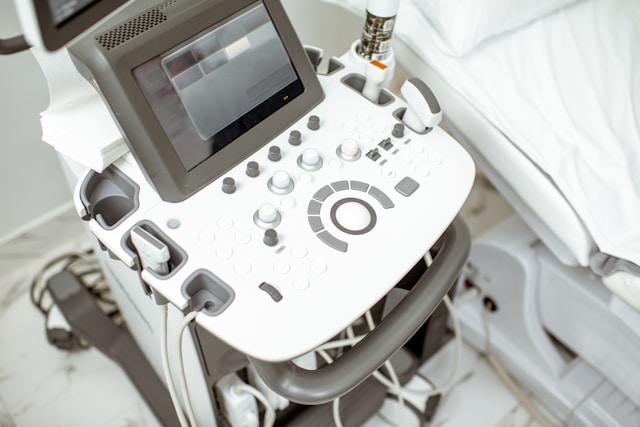
For many people, ultrasound is something connected with hospital scans and medical imaging. Doctors commonly use ultrasound to look inside the body, examine organs, monitor pregnancies, or check blood flow.
The technology has been used safely for decades because it relies on sound waves rather than radiation.
Now, scientists are exploring a very different use for ultrasound—one that could eventually help treat serious diseases.
Researchers at Kaunas University of Technology, also known as KTU, have discovered that low-frequency ultrasound may directly affect how blood flows through the body.
Their findings suggest that ultrasound may one day help improve circulation, oxygen delivery, and even support the treatment of diseases such as heart disease, Alzheimer’s disease, diabetes, and cancer.
The study was published in the journal Sensors.
The researchers found that ultrasound does not affect blood in only one way. Instead, different sound frequencies create very different effects on red blood cells.
Red blood cells, also known as erythrocytes, carry oxygen throughout the body. Under normal conditions, these cells can naturally stick together and form small clusters. Scientists call these clusters aggregates.
This process is important because it affects blood viscosity, which is basically how thick or sticky blood becomes. Blood that is too thick may flow less efficiently through blood vessels, making it harder for oxygen to reach tissues and organs.
Professor Vytautas Ostaševičius, one of the lead researchers at KTU, explained that high-frequency ultrasound caused red blood cells to gather together more strongly. This increased blood viscosity and could potentially make oxygen exchange less efficient.
The scientists discovered that high-frequency ultrasound creates standing acoustic waves. These waves push blood cells toward certain areas where pressure is lower, encouraging them to cluster together.
However, low-frequency ultrasound had the opposite effect.
Instead of causing clustering, low-frequency ultrasound produced traveling acoustic waves that generated gentle forces capable of separating grouped red blood cells into individual cells.
The researchers said this was one of the most surprising discoveries of the study.
According to the team, this may be the first time scientists have clearly shown that low-frequency ultrasound can separate red blood cell clusters into single cells.
This could be very important because separated blood cells may move more freely through blood vessels. When there is more space between the cells, oxygen can also spread more effectively throughout the body.
The researchers believe this could improve oxygen exchange in tissues and help support circulation in people with certain diseases.
The idea for the study began during the COVID-19 pandemic.
At that time, doctors around the world were searching for non-invasive ways to help patients suffering from severe breathing problems. Many patients had dangerously low oxygen levels, and researchers wanted to explore methods that could improve oxygen delivery without surgery or medication.
This inspired the KTU team to investigate whether ultrasound could help strengthen the interaction between oxygen and hemoglobin, the protein inside red blood cells that carries oxygen.
To study this idea, the scientists divided patient blood into hundreds of samples and exposed them to ultrasound waves with different frequencies and intensities.
The researchers also used advanced computer models known as digital twins to study how ultrasound travels through biological tissues.
Using this technology, the team developed a special low-frequency ultrasound device capable of sending sound waves much deeper into the body than traditional ultrasound equipment. According to the researchers, the new technology can reach about four times deeper into tissue than conventional systems.
The invention has already received international patent protection.
Although the technology is still in an early experimental stage, scientists believe it may eventually have many medical uses.
One area being explored is cancer treatment.
Tumors often contain regions with very low oxygen levels. This can make cancer harder to treat because some therapies work better when oxygen is present.
Researchers believe that if ultrasound can improve local blood flow and oxygen delivery, it may help make certain cancer treatments more effective.
The team is also interested in Alzheimer’s disease.
Scientists have long struggled to deliver drugs into the brain because of the blood-brain barrier, a protective system that blocks harmful substances from entering brain tissue. Researchers believe low-frequency ultrasound may someday help temporarily open this barrier and improve targeted drug delivery.
Another possible use involves diabetic foot ulcers.
People with diabetes often develop poor circulation, especially in the feet. Reduced blood flow can slow wound healing and increase the risk of infection and amputation. Researchers think ultrasound might help improve circulation in damaged tissues and support healing.
Future uses may also include targeted drug delivery and supportive treatments for cardiovascular and lung diseases.
The scientists stress that the technology is still experimental and far from being used routinely in hospitals. More studies will be needed to confirm safety, effectiveness, and long-term benefits in humans.
Still, the findings suggest that ultrasound could become much more than a simple imaging tool.
This study is exciting because it explores an entirely new way to use ultrasound technology. Instead of only looking inside the body, ultrasound may eventually help physically change blood flow and oxygen delivery. The researchers also identified an interesting difference between high-frequency and low-frequency ultrasound, showing that not all ultrasound behaves the same way.
One strength of the study is that the scientists combined laboratory testing with advanced digital modeling. This helped them better understand how sound waves interact with blood cells and biological tissue.
However, the research is still very early. Most of the work was done using blood samples and experimental systems rather than long-term testing in human patients. Scientists still need to determine whether these effects can safely improve disease outcomes in real medical settings.
Even so, the findings open a promising new area of research. If future studies confirm the benefits, low-frequency ultrasound may someday become a non-invasive way to improve circulation and support treatment for several major diseases without relying entirely on drugs or surgery.
If you care about diabetes, please read studies about bananas and diabetes, and honey could help control blood sugar.
For more health information, please see recent studies about Vitamin D that may reduce dangerous complications in diabetes and plant-based protein foods may help reverse type 2 diabetes.
Source: Kaunas University of Technology.