
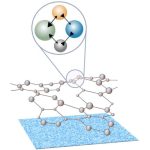
How uneven molecular forces might explain the mystery of life
A new study from the Max Planck Institute for Dynamics and Self-Organization suggests that tiny, one-sided interactions between molecules might play a powerful role...

Mysterious galaxy without dark matter challenges what we know about the universe
Astronomers have discovered a rare kind of galaxy that seems to be missing one of the universe’s most important ingredients: dark matter.
Using powerful telescopes...

Quantum fast lane: Scientists build superfast schrödinger-like states
results could be measured.
But now, researchers from the University of Liège in Belgium have found a way to speed things up dramatically—by up to...

Scientists use lasers and atoms to win a mind-bending quantum game
Imagine playing the tiniest game of checkers, where the pieces are atoms and lasers move them around a tiny board.
That’s not science fiction—it’s a...

Scientists find new way to speed up quantum measurements without losing accuracy
A team of scientists has found a clever new way to make quantum measurements faster without losing accuracy—a big step forward for quantum technologies...

Scientists find half the universe’s missing hydrogen hiding in giant gas halos
For decades, astronomers have known something didn’t add up in our universe.
The amount of “normal” matter—stars, gas, and galaxies—seen in the universe today doesn’t...

Physics shows the perfect roof shape for energy efficiency
When Adrian Bejan, a mechanical engineering professor from Duke University, visited the town of Benevento in southern Italy, something caught his eye—the roofs of...

Scientists use 56-qubit quantum computer to prove true randomness
In a major breakthrough, scientists have used a 56-qubit quantum computer to create and confirm truly random numbers — something that’s impossible for regular...

Scientists discover new kind of quantum entanglement
A team of researchers from the Technion – Israel Institute of Technology has made a major breakthrough in quantum physics.
They've discovered a brand-new type...
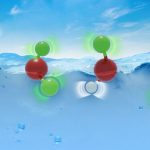
Why heavy water acts so much like regular water
Water covers more than 70% of our planet, and it’s made of H₂O—two hydrogen atoms bonded to one oxygen atom.
But there’s also a rare...