
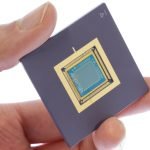
Scientists develop first 2D semiconductor with 1,000 transistors
In today's world, we use a lot of technology, like computers and smartphones, which need electricity to work.
This electricity often turns into heat, which...

Scientists create super-fast lasers on ultra-tiny chips
Lasers are a lot more than just fancy light shows or tools for scanning your groceries.
They play a crucial role in fields like telecommunications,...

Soap holds the secret to longer-lasting batteries, shows study
Imagine your battery lasting much longer, maybe even a week on a single charge for your phone, or driving your electric car for 500...
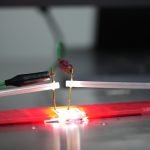
Scientists unveil a new strategy for high-efficiency solar cells
Recently, a team of scientists, led by Prof. Wang Mingtai from the Institute of Solid State Physics, has made a significant breakthrough in solar...
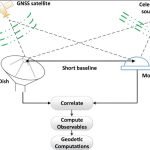
Scientists create revolutionary technique to boost GPS accuracy
Have you ever used GPS on your phone to find a place?
Most of us do, but what if this technology could become even more...
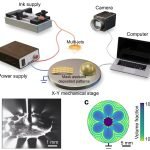
This new, cost-effective microprinter could change everything
In today's rapidly advancing world, a team of scientists from The Hong Kong University of Science and Technology (HKUST) is making big waves.
They've created...

New pacemaker uses heartbeat energy to recharge battery
Pacemakers are crucial medical devices used to regulate and maintain a healthy heart rate. However, traditional and wireless pacemakers have limited battery life, typically...

Scientists find way to build future materials with nanocrystal magic
In a groundbreaking experiment, scientists have watched tiny particles join forces to create new, super-tiny structures that could one day power your gadgets, light...
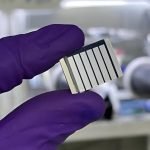
Solar power breakthrough: New technique boosts sun-to-energy conversion!
Solar power is fantastic – it's a way to turn sunlight into electricity.
But like every technology, it has room for improvement.
Researchers in China have...

How scientists use cold magic to control magnet waves
Have you ever wondered what powers your gadgets, like phones and computers?
Inside, there are tiny parts that move electric currents to make things work.
But...