

Scientists set new limits on dark matter’s mysterious lifetime
Dark matter is one of the greatest mysteries in the universe.
Scientists believe it makes up most of the mass in the cosmos, yet they...
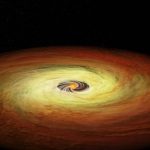
James Webb Telescope finds planet-forming disks last longer than expected
Astronomers have long believed that planet-forming disks—clouds of gas and dust around young stars—last only about 10 million years before disappearing.
But new observations using...

Rogue planets: Born from chaos in young star clusters
Astronomers have long been puzzled by mysterious, planet-sized objects drifting freely through space, unattached to any star.
These cosmic wanderers, called planetary-mass objects (PMOs), weigh...
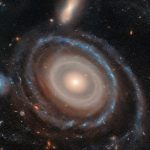
Bullseye galaxy: Astronomers find a cosmic wonder with nine rings
A team of astronomers, led by Yale University, has made an exciting discovery—a giant galaxy with a record-breaking nine rings!
The galaxy, officially named LEDA...

A new way to measure where the Milky Way’s dark matter is
Our Milky Way Galaxy is rich in dark matter. The problem is, we can’t see where it’s distributed because, well, it’s dark.
We also don’t...
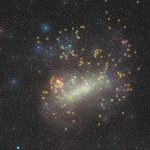
Scientists discover two stray supernova remnants in neighboring galaxy
Astronomers using the European Space Agency’s XMM-Newton telescope have made an unexpected discovery—two supernova remnants in the outskirts of the Large Magellanic Cloud (LMC).
This...

Neutron star collisions could reveal their deepest secrets
Scientists have discovered a new way to study the mysterious interiors of neutron stars by listening to the "pure tone" they produce after a...
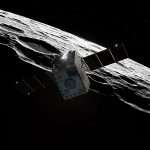
Lunar Trailblazer: NASA’s new mission to find water on the moon
A new NASA mission called Lunar Trailblazer is heading to the moon to search for water!
On Wednesday, February 26, a special camera built by...
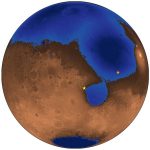
Ancient beaches on Mars: New evidence of a long-lost ocean
A Chinese rover that landed on Mars in 2021 has found strong evidence that the planet once had a vast ocean.
Scientists believe this discovery...
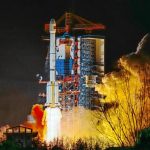
A Chinese satellite tests orbital refuelling
Satellites often face a disappointing end: despite having fully working systems, they are often de-orbited after their propellant runs out.
However, a breakthrough is on...