

About a third of supermassive black holes are hiding
Supermassive black holes can have trillions of times more mass than the Sun, only exist in specific locations, and could number in the trillions.
How...

How astronauts train for long missions
Going to space is one of the most challenging jobs in the world. Imagine being far from Earth, living in a tiny spacecraft or...

Why exploring Mars matters
Mars has fascinated humans for centuries, earning the nickname "the Red Planet" because of its rusty color. In recent decades, scientists have been studying...
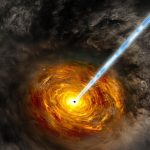
This quasar helped end the dark ages of the universe
After the Big Bang came the Dark Ages, a period lasting hundreds of millions of years when the universe was largely without light.
It ended...
Exploring Venus and beyond: the next steps in space travel
Space agencies around the world are setting their sights on new frontiers, with plans to explore Venus and other distant destinations in our solar...

The challenges of designing deep space spacecraft
Exploring the far reaches of space is one of humanity’s most ambitious goals. Deep space missions, which travel far beyond Earth’s orbit to places...
The future of robots on distant moons
In recent years, scientists and engineers have turned their eyes toward the distant moons of our solar system, places like Europa, Titan, and Enceladus.
These...

How CubeSats are changing space exploration
Space exploration used to be something only the biggest and wealthiest organizations could afford. Massive satellites and spacecraft required years of design and billions...

Why we study black holes and neutron stars
Black holes and neutron stars are among the most fascinating and mysterious objects in the universe.
These cosmic phenomena form when massive stars reach the...

Could humans colonize mars in the next 100 years?
Mars has captured human imagination for centuries, with its reddish glow in the night sky and its status as Earth’s closest planetary neighbor. But...