
Growing older often brings new challenges. Tasks that once felt easy, such as getting out of a chair, climbing stairs, or carrying household items, can gradually become more difficult.
Many people assume that slowing down is simply an unavoidable part of aging. However, new research suggests that a surprisingly small amount of daily exercise may help older adults maintain strength, balance, and independence.
Scientists at Penn State College of Medicine have discovered that a brief exercise program lasting only four minutes per day produced significant improvements in physical function among adults aged 65 and older. Their findings were published in the journal PLOS One.
Maintaining mobility is one of the most important factors for healthy aging. Mobility allows people to move safely around their homes and communities, perform daily activities, and continue living independently. When mobility declines, the risk of falls increases dramatically.
Falls are a major health concern for older adults. According to health experts, falls are among the leading causes of serious injury, hospitalization, disability, and death in older populations. Improving strength and balance is one of the most effective ways to reduce this risk.
Although exercise is widely recommended, many older adults struggle to follow traditional workout programs. Long exercise sessions may seem intimidating. Some people worry about pain, fatigue, injury, or simply finding enough time in the day.
The Penn State researchers wanted to find out whether a very short exercise routine could still provide meaningful health benefits. They developed a program called FAST-2, short for Functional Activity Strength Training.
The study included 97 volunteers whose average age was 74 years. Participants were divided into two groups. One group followed the FAST-2 exercise routine, while the other group continued their normal activities.
Before the study started, participants were not highly active. On average, they performed only about 18 minutes of exercise each week. This made them a useful group for testing whether a simple intervention could produce measurable changes.
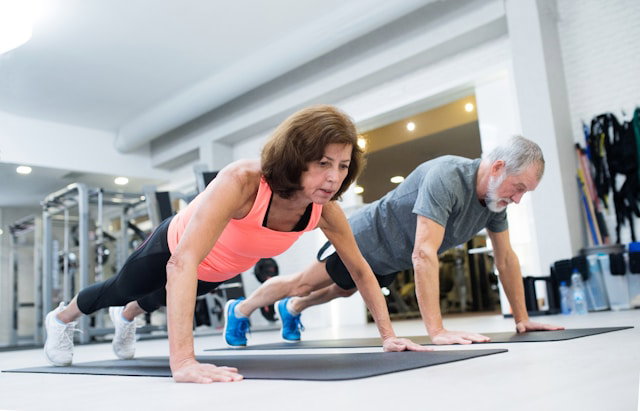
The FAST-2 routine included four basic exercises designed to strengthen different parts of the body. Participants performed pushups, chair stands, resistance-band rows, and stair stepping. Each exercise lasted 30 seconds and was followed by a 30-second rest period.
The researchers made sure the program could be adapted to different ability levels. Participants who found traditional pushups difficult could perform them against a wall or countertop. Other exercises were also modified when necessary to ensure safety and comfort.
As participants gained strength, they were encouraged to increase the difficulty. This gradual progression helped keep the exercises challenging while remaining manageable.
To evaluate the program, researchers measured several aspects of physical performance. They assessed how many times participants could stand up from a chair within 30 seconds, how long they could stand on one leg, and how quickly they could move from sitting to standing.
After 12 weeks, the exercise group showed clear improvements. Participants completed more chair stands, balanced longer on one leg, and stood up more quickly than they had at the start of the study.
Specifically, they performed an average of 4.2 additional chair stands during the 30-second test. Their balance improved by 3.6 seconds, and they reduced their sit-to-stand time by 2.3 seconds.
These changes may appear modest, but they represent important improvements in everyday function. Better balance can reduce the risk of falling. Greater leg strength can make climbing stairs and getting out of chairs easier. Faster movement can improve confidence and independence.
An additional benefit was the program’s simplicity. Participants completed the exercises on 81 percent of study days, showing that the routine was easy to maintain. This is important because even the best exercise program is ineffective if people do not continue doing it.
The researchers believe that making exercise shorter and less complicated may encourage more older adults to participate. Instead of requiring gym memberships, special equipment, or lengthy workouts, the FAST-2 approach focuses on brief but consistent activity.
Lead researcher Christopher Sciamanna emphasized that the body can respond surprisingly quickly to exercise. Regular practice, even in small amounts, can produce meaningful gains in strength and function.
If you care about bone health, please read studies that plant-based diets can harm your bone health without these nutrients, and how to ease arthritis with anti-inflammatory foods.
For more health information, please see recent studies that too much of this vitamin may increase your risk of bone fractures, and results showing this type of exercise may protect your bone health, slow down bone aging.
Source: Penn State College of Medicine.


