As NASA prepares for future missions that could send astronauts back to the Moon, scientists are trying to answer an important question: what will those astronauts eat during long stays on the lunar surface?
A new study suggests that one possible answer could be chickpeas.
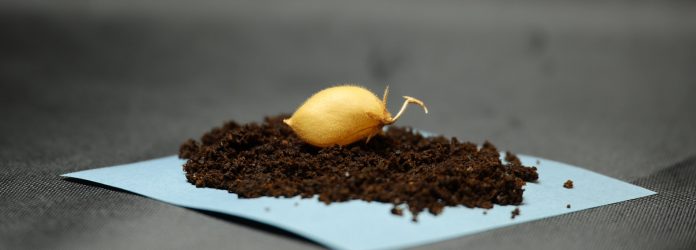
Researchers from the University of Texas at Austin and Texas A&M University have successfully grown and harvested chickpeas in simulated lunar soil, often called “moon dirt.”
The work marks the first time this crop has been produced in such a challenging environment. The findings were published in the journal Scientific Reports.
The study is part of a growing effort to understand whether food can be produced directly on the Moon.
Transporting large amounts of food from Earth would be extremely expensive and difficult for long missions. If astronauts could grow crops locally, it would make future lunar exploration far more sustainable.
However, growing plants on the Moon is not simple. The surface is covered by a layer of dusty material known as lunar regolith. Unlike soil on Earth, this material contains almost no organic matter and no microorganisms that help plants grow. Although it does contain minerals that plants need, it also includes heavy metals that can be harmful to plant health.
To test whether crops could grow under these conditions, the scientists used a specially designed lunar soil simulant created by Exolith Labs. This material closely mimics the chemical composition of samples brought back from the Moon during the Apollo missions.
Because pure lunar regolith is too harsh for plants, the researchers modified it to create a more supportive environment. They mixed the simulated moon dirt with vermicompost, a nutrient-rich material produced by earthworms. Vermicompost forms when worms break down organic waste such as food scraps or natural fibers. In future space missions, similar waste materials could potentially be recycled to produce compost for crops.
The team also treated the chickpea seeds with beneficial fungi known as arbuscular mycorrhizae before planting them. These fungi form a partnership with plant roots. They help plants absorb important nutrients while reducing the uptake of harmful heavy metals.
After preparing the soil mixture, the researchers planted chickpeas in different combinations of simulated moon dirt and vermicompost. The results were encouraging. Chickpeas were able to grow and produce harvestable seeds in mixtures containing up to 75 percent moon dirt. When the proportion of lunar simulant became higher than that, the plants began to show signs of stress and eventually died early.
Even under difficult conditions, plants that were treated with the fungi survived longer than those without it. The fungi also successfully colonized the simulated lunar soil, suggesting that only a single introduction might be needed in a real lunar farming system.
Although the team successfully harvested chickpeas, important questions remain. Scientists still need to determine whether the plants absorb toxic metals from the lunar soil and whether the harvested chickpeas would be safe and nutritious for astronauts to eat.
Researchers say the study is an important step toward growing food beyond Earth. With further research, crops like chickpeas could one day become part of a sustainable food system for astronauts living and working on the Moon.