
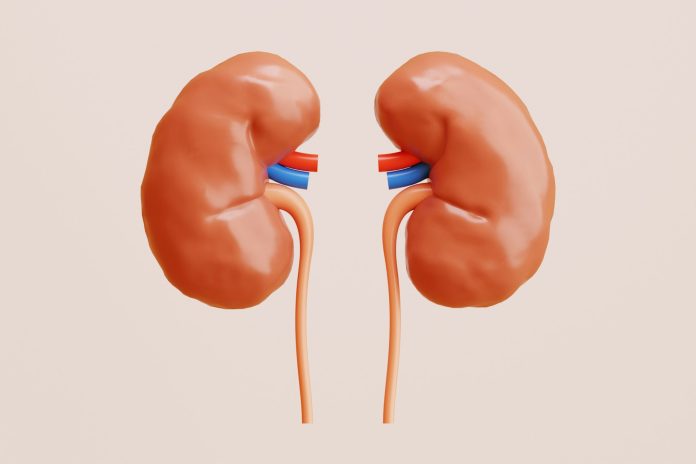
Healing from sudden kidney damage isn’t just about the kidney cells growing back. New research from the University of Connecticut shows that the kidney’s supporting structure—called the extracellular matrix, or ECM—also plays a key role.
The study was published in the Journal of the American Society of Nephrology.
Our kidneys, like many organs, are soft and flexible. But beneath that softness is a hidden support system. This framework, known as the extracellular matrix, helps keep everything in the right place.
Even though it’s found in nearly every part of the body, scientists haven’t paid much attention to it during studies on kidney injury. Most research focuses on tubule cells, which are the main cells responsible for filtering waste in the kidney.
Dr. Dong Zhou, a kidney specialist at the UConn School of Medicine, explained that when kidneys are suddenly injured, it’s usually the tubule cells that are damaged. These cells need to regrow for the kidney to heal. But Zhou’s team found that the ECM sends signals that help guide the tubule cells on where and how to grow.
Unlike a construction site with a foreman giving instructions, the body uses physical cues in the environment to signal what needs to be done. One of those cues is stiffness. The researchers observed that after a kidney injury, the ECM becomes slightly stiffer in the damaged area.
This temporary stiffening seems to attract both tubule cells and the cells that help rebuild the ECM. After the kidney starts to recover, the stiffness goes away, and everything returns to normal.
This discovery shows that stiffness in the ECM is an important part of how the body knows where to repair damage in the kidney. It’s a brand-new way of thinking about healing.
Zhou and his team looked more closely at the ECM and analyzed the different proteins present before and after injury. They found that one protein, called Mfap2, showed up early and was especially common in damaged areas.
To see how important this protein was, they studied mice that did not have Mfap2. When these mice suffered kidney injuries, they healed much more slowly than normal mice. This shows that Mfap2 is important for recovery.
The researchers are now working with bioengineers to develop special kidney scaffolds made from ECM. These could be used in future treatments for people with acute kidney damage.
The ECM is powerful, but it can also be harmful. While short-term changes in the ECM help healing, long-term buildup of ECM can lead to kidney scarring, which is a serious problem.
Zhou’s team also has another upcoming paper in the journal Nature Metabolism. That study explores how early changes in ECM proteins can affect the metabolism of kidney cells during scar formation. Scar tissue is a common outcome in many long-term kidney diseases.
In summary, this research shows that the ECM is not just background support—it plays an active role in healing. Paying more attention to it could lead to better treatments for people with kidney injuries.
If you care about kidney health, please read studies about how to protect your kidneys from diabetes, and drinking coffee could help reduce risk of kidney injury.
For more information about kidney health, please see recent studies about foods that may prevent recurrence of kidney stones, and eating nuts linked to lower risk of chronic kidney disease and death.
Copyright © 2025 Knowridge Science Report. All rights reserved.