Scientists have discovered new evidence that water was already helping shape Earth’s interior more than 3 billion years ago.
The finding suggests our young planet was far more active than researchers once believed and that some of the geological processes we see today may have begun much earlier than expected.
The discovery comes from an international team of researchers led by geochemist Dr. Eric Vandenburg from the University of Adelaide.
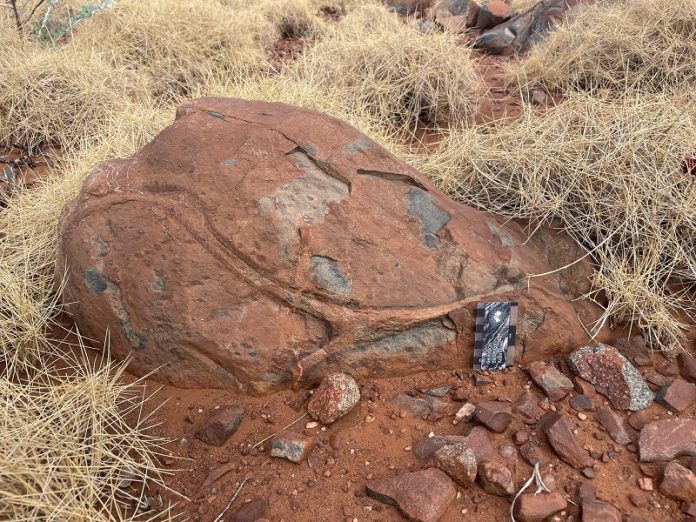
The team studied some of Earth’s oldest volcanic rocks, collected from the Pilbara Craton in Western Australia.
Their findings were published in the journal Nature Communications.
The rocks formed about 3.1 billion years ago, during a time when Earth looked very different from today. The planet was much hotter, and scientists have long debated whether water could have reached deep into Earth’s interior under those early conditions.
Today, water constantly moves between Earth’s surface and its interior through a process called plate tectonics.
At places known as subduction zones, one tectonic plate slides beneath another, carrying seawater and water-rich rocks deep into the mantle.
The water helps create magma, which rises to the surface and fuels volcanic eruptions. This process also plays an important role in building continents.
However, scientists believe the early Earth was too hot for modern plate tectonics to work the way it does today. This raised an important question: if plate tectonics had not fully developed, how did water get deep underground billions of years ago?
The researchers believe they have found the answer.
Their study suggests that instead of modern plate tectonics, the early Earth may have used a different process, which they call “dripduction.” In this process, heavy sections of the planet’s outer crust, which contained water, slowly became unstable and sank into the hot mantle below.
As these water-rich rocks descended, the heat caused them to release their water into the surrounding mantle.
This water helped melt nearby rock, producing magma that eventually rose to the surface through volcanic eruptions. Over billions of years, the magma cooled and hardened into the ancient volcanic rocks that scientists can study today.
By carefully examining the chemical signatures preserved inside these rocks, the team found strong evidence that water had indeed traveled deep below Earth’s surface before helping create the magma.
This discovery helps answer one of the biggest questions in geology: when did Earth begin exchanging materials between its surface and deep interior? Understanding this process is important because it influences volcanic activity, the growth of continents and the movement of essential elements around the planet.
Water cycling also played a major role in creating the conditions that eventually made Earth suitable for life.
The Pilbara Craton is one of the few places on Earth where rocks this ancient have survived in excellent condition. These rare rocks act like a time capsule, preserving clues about the planet’s earliest history.
The new findings suggest that although the young Earth did not yet operate exactly like the modern planet, it was already recycling water deep underground. This reveals that Earth became a dynamic, evolving world much earlier than scientists had previously thought.