
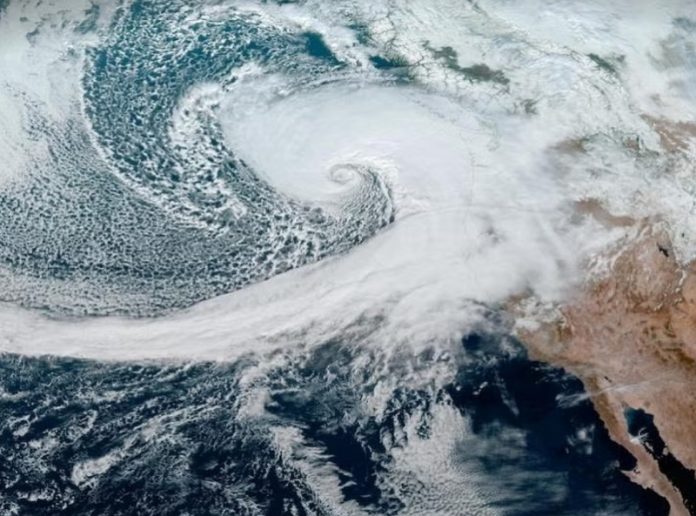
A huge ocean current in the Atlantic Ocean may seem far away from California, but new research suggests it could have a major impact on the state’s future weather.
Scientists from the University of California, Riverside have found that the slowing of the Atlantic Meridional Overturning Circulation (AMOC) could lead to stronger storms reaching California by the end of this century.
At the same time, Greenland could receive less snowfall, affecting the growth of its ice sheets.
The AMOC is often described as a giant conveyor belt in the ocean.
It carries warm water from the tropics north toward Europe, where it helps keep the climate relatively mild.
After the water cools, it becomes denser and sinks deep into the ocean before flowing south again. This continuous movement plays an important role in regulating Earth’s climate.
Scientists already knew that the AMOC has been slowing as the planet warms. However, they were not sure how this slowdown would affect weather far beyond the Atlantic Ocean.
The new study, published in Nature Communications, used climate models to explore what could happen if greenhouse gas emissions remain high and the AMOC continues to weaken throughout the century.
The researchers found that changes in Atlantic Ocean temperatures could strengthen high-altitude winds that guide storms across the Northern Hemisphere. These stronger winds would allow storms to carry more moisture toward the west coast of North America, creating more powerful atmospheric rivers.
Atmospheric rivers are long, narrow bands of water vapor in the atmosphere. They move huge amounts of moisture from the tropics toward higher latitudes. These weather systems are responsible for many of California’s largest rainstorms.
Atmospheric rivers are both helpful and harmful. They provide much of California’s fresh water, filling reservoirs and supporting farms. However, when they become too strong, they can trigger dangerous flooding, landslides, and widespread damage to homes, roads, and other infrastructure.
The study also predicts changes in other parts of the world. Atmospheric rivers could become more common along the eastern coast of South America and around Antarctica. In contrast, Greenland is expected to experience fewer storms, leading to less snowfall. Since fresh snow helps build and maintain Greenland’s massive ice sheet, less snowfall could affect how much ice remains there over time.
The researchers say these changes depend on future greenhouse gas emissions. Greenhouse gases are released by burning coal, oil, and natural gas, as well as from livestock, deforestation, industrial activities, and landfill waste. Reducing these emissions could slow climate change and lessen the weakening of the AMOC.
Although stronger storms increase the risk of floods, the researchers say they also highlight the need for better planning. Improved weather forecasting and larger water storage systems could help communities capture more rain during wet years while reducing the damage caused by extreme weather.
The study shows how closely connected Earth’s climate system is. A change in one major ocean current can influence weather patterns thousands of kilometers away, reminding us that climate change can have unexpected effects across the globe.