
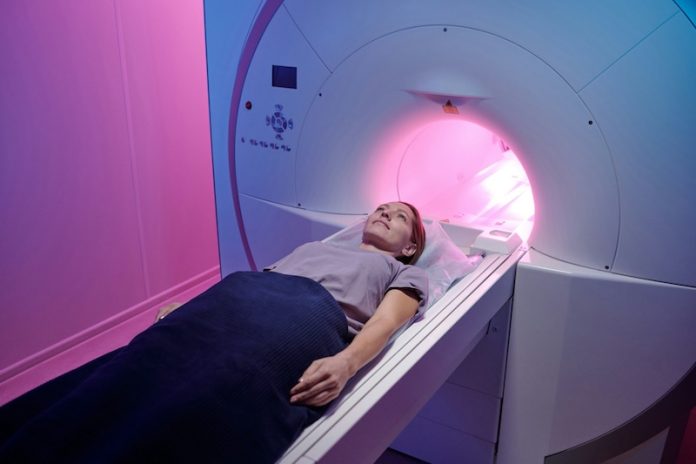
A new artificial intelligence system may soon help doctors find serious brain problems faster and more accurately.
This technology, created by researchers at King’s College London, was designed to read brain MRI scans and spot abnormalities linked to conditions such as stroke, multiple sclerosis, brain tumors, and many other diseases.
The findings were published in the journal Radiology AI, and they come at a time when hospitals around the world are struggling with long waiting lists for MRI results.
MRI scans are one of the most important tools doctors use to diagnose brain problems. They help identify issues like strokes, aneurysms, tumors, infections, and diseases that damage nerves.
But the demand for MRI scans has grown every year for more than a decade, while the number of trained radiologists has not kept up. This mismatch has created backlogs in many hospitals, causing delays in diagnosis and treatment. These delays can be life‑threatening, especially for conditions where every minute matters, such as stroke.
To address this problem, the researchers built an AI model that can look at MRI scans and decide whether they are “normal” or “abnormal.” In early tests, the system performed as well as expert radiologists. It could correctly tell when a scan showed signs of trouble and when it did not.
The researchers then tested the AI further by giving it MRI scans showing specific diseases—such as stroke, brain tumors, and multiple sclerosis—that it had never seen before during training. The AI was still able to identify these problems correctly, showing that it could generalize well to new cases.
One of the biggest challenges in building AI for medical imaging is that it requires thousands of scans that have been labeled by specialists. Labeling these scans is slow, expensive, and takes radiologists away from their clinical work.
To overcome this issue, the team created an AI model that could teach itself. Instead of relying on manually labeled images, the researchers trained the model on more than 60,000 existing brain MRI scans along with the written radiology reports that were originally created by doctors.
By learning what radiologists wrote about each scan, the AI learned how to recognize abnormalities without needing experts to label the images one by one.
Dr. Thomas Booth, the senior author of the study and a neuroradiologist at King’s College Hospital, explained that the system learned by connecting images with the language used to describe them.
Because radiology reports explain what abnormalities look like, the AI was able to match these descriptions to features in the MRI scans. This allowed the model to develop an understanding of what healthy and unhealthy brains look like.
The researchers also built an extra feature into the system: it can search for cases similar to a scan or a word typed into it. For example, if a doctor types in “glioma,” a type of brain tumor, the AI can pull up past examples of gliomas from its training data.
This could help doctors compare images, review similar cases, or use them for teaching medical students and trainees. It could also help radiologists double‑check uncertain findings.
The study suggests that this AI system could eventually be used while a patient is still in the MRI scanner. It could flag abnormal scans immediately, allowing doctors to act faster. It could also help catch mistakes, highlight important findings, and reduce delays in writing reports. All of these benefits could improve patient care, especially for urgent conditions.
However, the researchers emphasize that the AI is not meant to replace radiologists. Instead, it is meant to support them by speeding up their work and reducing errors. The next major step will be to test this system in real hospitals. Dr. Booth announced that a large randomized trial will begin in the UK in 2026 to see how well the AI works in busy clinical settings.
Overall, the study shows great promise. The AI model was able to recognize many different kinds of brain abnormalities without needing manually labeled training data, which is a major achievement. It could help reduce long waiting times for MRI results and ensure that serious problems are spotted sooner.
But there are still important questions to answer. Researchers must study how accurate the model remains in daily medical practice, how well it works on patients from different hospitals, and how radiologists and AI can work together safely.
If these questions are addressed successfully, this technology could become an important tool for improving healthcare.
If you care about stroke, please read studies that diets high in flavonoids could help reduce stroke risk, and MIND diet could slow down cognitive decline after stroke.
For more health information, please see recent studies about antioxidants that could help reduce the risk of dementia, and tea and coffee may help lower your risk of stroke, dementia.
Copyright © 2025 Knowridge Science Report. All rights reserved.


